The traditional investment cycle, rooted in annual planning, top-down decision-making and bottom up bidding, is increasingly misaligned with modern business needs. As companies face rapid technological changes and shifting customer expectations, the old model—dominated by rigid budgets, excessive executive meetings, and a bottom-up bidding process—can no longer keep up.
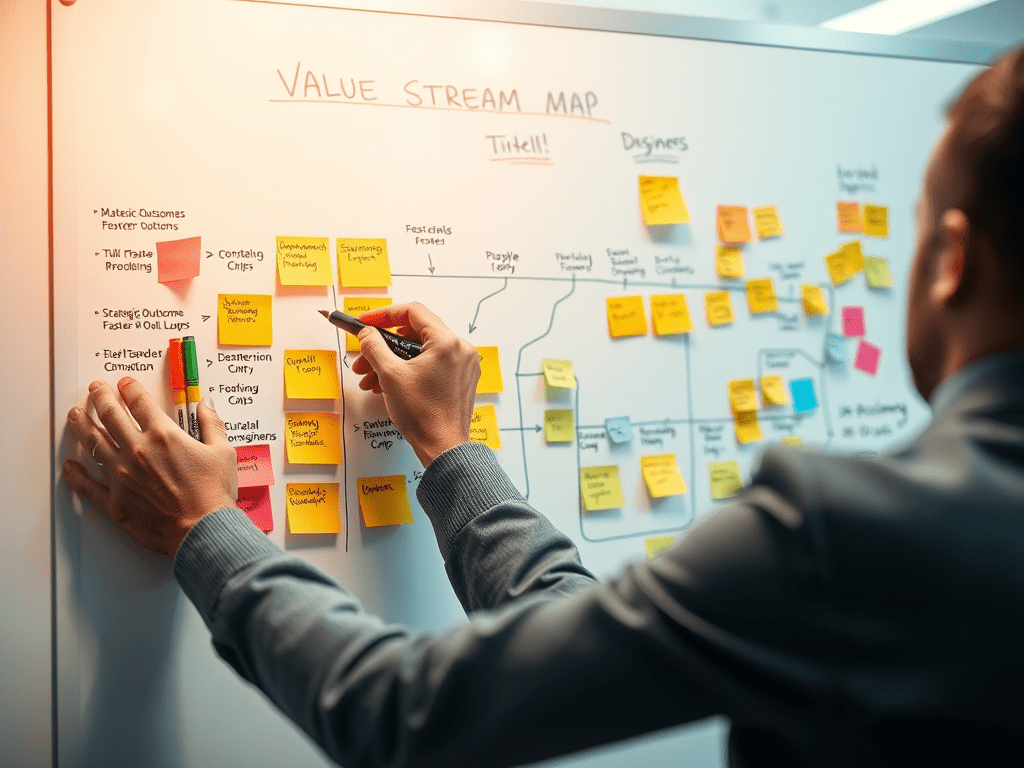
What if we treated your company’s investment planning and funding allocation not as a slow, bureaucratic process, but as a value stream? By viewing it this way, the entire cycle becomes focused on maximising value and minimising waste, rather than merely executing projects within budget or time constraints. This shift could radically transform how investments flow through your organisation, improving alignment, execution, and overall effectiveness.
Let’s break down what would change—and how much more efficient and impactful your investment cycle could be if you approached it as a value stream to illuminate waste, massively reduce the cycle time, optimise value, and align the flow of work, people, and money.
Step 1: Value-Driven Planning (Strategic Alignment from Day One)
When you treat the investment cycle as a value stream, each decision and allocation of resources is directly linked to strategic outcomes. Imagine the impact of aligning every dollar and work hour with what will truly create value for customers and the business.
McKinsey suggests that in traditional cycles, leaders can spend up to 23 hours per week in executive meetings trying to guess which projects will succeed. But when the focus is on value, you cut out this guesswork, allowing the cycle to be driven by outcome-based planning. Every investment would directly support business priorities, improving decision-making clarity and cutting out the non-value-add time spent on projects that look good on paper but don’t deliver customer impact.
Step 2: Shorter Cycles, Faster Feedback (Trim the Fat)
Annual planning cycles don’t work in today’s fast-paced business world. Often large teams are buried in spreadsheets for up to 15 months prior to work starting during which time the work can go stale, reduce in priority or better opportunities have emerged. Traditional approaches are bogged down by long review timelines, approvals, and changes in strategic direction mid-cycle, leading to wasted time and resources.
By treating investment cycles like a value stream, you introduce shorter, iterative funding cycles, which enable faster decision-making and feedback. The waste associated with long cycle times, decision bottlenecks, and wait time gets trimmed away, allowing your teams to stay focused on what matters most. This enables you to pivot resources quickly when priorities shift, ensuring your funding allocation remains aligned to the most critical outcomes.
Step 3: Eliminate Work Mismatch (Aligning Work with Strategy)
In traditional investment planning, the bottom-up bidding process often creates a disconnect between what teams can do and what the business needs. Teams propose work based on their capabilities, not based on the company’s strategic objectives. As a result, you end up with 40% of investments misaligned because they match team capacity rather than the work that delivers value (BCG Global).
By thinking of funding allocation as part of a value stream, you can flip the approach. Instead of trying to match work to teams, you align teams and resources to the most critical work. The process becomes more dynamic, ensuring that projects directly contribute to strategic priorities. You eliminate rework loops and focus on value-add activities, ensuring every resource is working toward high-impact outcomes.
Step 4: Agile Funding Model (Dynamic Resource Allocation)
One of the most significant barriers to improving the investment cycle is the reliance on outdated funding models that prioritise short-term goals over long-term value creation. In many organisations, the annual budget cycle locks resources into projects, months in advance, that meet budgetary targets but fail to deliver lasting customer value. This rigid approach encourages teams to start more work than they can finish, with 60-80% of work often remaining incomplete, consuming next year’s budget. This not only reduces overall efficiency but also prevents organisations from reallocating resources to more valuable initiatives that may arise later in the cycle.
In a value-stream-driven approach, the funding model becomes dynamic and adaptive, allowing for continuous reallocation of resources based on real-time data and shifting priorities. This means:
- Funding follows the flow of work: Instead of rigid, annual budgets, funds are directed toward the projects and initiatives that are delivering the most value.
- Prevent inefficiencies: With shorter funding cycles and feedback loops, the organisation can quickly pivot away from low-impact projects, minimising waste.
- Reduce work-in-progress backlog: Agile funding ensures that teams are working on completing high-value initiatives rather than spreading resources thin across too many incomplete projects.
This transformation enables businesses to make smarter, faster decisions about how to allocate resources, ensuring that funding, work, and strategic priorities stay aligned throughout the cycle.
Step 5: Measuring What Matters (From Utilisation to Value)
Traditional investment cycles often rely on utilisation metrics to measure success—tracking how busy teams are or how closely projects stick to budgets. However, in a value-stream-driven approach, the focus shifts from measuring activity to measuring outcomes. The right metrics ensure that investments are not only aligned with strategic objectives but also delivering real value and improving financial health.
- Measure if the Intent of the Outcome is Being Met:
Rather than focusing on whether projects are being completed within budget or on time, you should measure whether the intended outcomes of the investment are being realised. Are customer-focused goals being achieved? Is the investment driving the desired business results? This shift from output-based metrics to outcome-based metrics ensures that resources are allocated to initiatives that truly make a difference. - Measure if We’re Improving:
Beyond tracking outcomes, it’s critical to measure whether the organisation is getting better at delivering those outcomes over time. Are your investment decisions becoming more agile and responsive? Are teams improving their ability to deliver value with each cycle? By measuring continuous improvement, you can refine both the flow of work and the allocation of funding to maximise impact. - Measure Financial Health:
Finally, the ultimate goal is to ensure that these improvements in outcome delivery are translating into increased financial health. Are the projects and initiatives funded through the value stream contributing to revenue growth, cost savings, or other key financial indicators? This ensures that your investment cycle isn’t just delivering operational value but is also driving the overall financial success of the organisation.
By using these three types of metrics—outcome intent, continuous improvement, and financial health—you ensure that the investment cycle remains focused on what truly matters: delivering value to customers while enhancing the organization’s financial well-being.
Step 6: Increasing Transparency (Real-Time Visibility into Investment Flow)
In traditional investment cycles, transparency is often an afterthought, making it difficult for organisations to track the benefits of their investments and make good business decisions about what to do next. The lack of accurate data leads to duplication, wasted resources, and projects being prolonged unnecessarily. In many companies, the investment cycle is a black box. Funding goes in, work is done, but it’s difficult to see where the money went and what value was created. This lack of transparency creates budget waste, often as high as 30-40% due to duplication of efforts, delays, and projects that don’t deliver (BCG Global).
By adopting a value stream mindset, you introduce real-time visibility into the investment process. You can track how resources flow through different projects, ensuring that every investment is aligned with strategic goals. This enhanced transparency helps you catch misalignments early, optimising the allocation of resources, preventing costly delays and making it easier to track and realise benefits.
Step 7: Short Feedback Loops (Course-Correct Early and Often)
Long feedback loops in traditional cycles delay critical course corrections. By the time issues are identified, too much money and time have been wasted.
In a value stream, feedback loops are built into the process. Shorter cycles mean more frequent reviews and adjustments. You can catch problems early, fail fast, and pivot quickly to keep investments aligned with business needs. This reduces rework and ensures that the cycle remains agile and responsive to real-time challenges.
Aligning the Flow of Work, Money, and People
When you treat the investment cycle as a value stream, you achieve much more than just operational efficiency. You align the flow of work, money, and people to create a smooth, continuous stream of value. Resources are allocated dynamically to high-priority initiatives, teams are deployed where they are needed most, and funding follows the flow of work, not arbitrary budgets.
Key steps include:
- Shifting from Top-Down to Outcome-Based Investment: Move away from funding based on historical budgets and team capacity, and prioritise investments based on strategic outcomes and customer value.
- Implementing Agile Funding Models: Agile funding models ensure resources are allocated dynamically, allowing organisations to pivot quickly based on market needs and project outcomes.
- Real-Time Data and Transparency: Companies must invest in tools and processes that provide real-time visibility into ongoing work, ensuring investments are delivering value and allowing for adjustments when necessary.
This approach breaks down silos, eliminates bottlenecks, and ensures that your entire organisation is pulling in the same direction. The result? Better strategic alignment, faster delivery of high-value projects, and a more adaptive, responsive business.
Conclusion: Flow the Value, Not the Waste
By viewing your investment cycle as a value stream, you unlock a more efficient, effective way of allocating resources, prioritising work, and delivering value. You eliminate the waste that comes with long cycle times, misaligned priorities, and utilisation-focused metrics. Instead, you create a streamlined process that continuously adapts to business needs and delivers results.
Align the flow of work, money, and people. Let value, not waste, drive your investment decisions. What’s stopping you from transforming your investment cycle into a dynamic value stream that powers your company’s long-term success?
 DTGameplan Consulting
Leave a comment